International Nursery in Ho Chi Minh City: Why Starting School at Age 2 Matters
Table of Contents
- 1 What Is International Nursery Programme?
- 2 The Reality of Parenting in the Digital Age
- 3 “What If My Child Cries at the School Gate?”
- 4 Why a Nursery Program Can Make a Difference
- 5 Tesla Nursery Program
What Is International Nursery Programme?
Friendship starting at 2
Learning starting at 2
International Baccalaureate Education starting at 2
For many young children between 18 and 24 months, their world is still very small.
Their daily interactions often revolve around a few familiar people — mum, dad, or grandparents. These loving caregivers naturally provide comfort and support.
However, when children grow up in an environment where adults constantly anticipate every need, they may have fewer opportunities to develop independence, communication skills, and social confidence.
This stage of life is actually one of the most critical periods of brain development.
During this time, children benefit enormously from:
- rich stimulation
- social interaction
- physical movement
- language exposure
- guided exploration
Without these experiences, some children may experience:
- delays in language development
- limited social interaction skills
- reduced exposure to stimulating learning environments
This is why many early childhood experts emphasize the importance of high-quality nursery education starting from age 2.
The Reality of Parenting in the Digital Age
Parenting today is very different from the time when many parents or grandparents were raising children.
Modern families often face:
- busy work schedules
- fewer opportunities for children to interact with peers
- increased exposure to digital devices such as iPads, tablets, and smartphones
While these tools can sometimes help exhausted parents manage daily routines, excessive screen exposure during early childhood can negatively affect brain development.
Research increasingly shows that too much screen time at an early age may impact:
- language development
- attention span
- emotional regulation
- social communication
In some cases, these challenges only become visible when children reach age 5 or early primary school. This is why early childhood specialists strongly recommend active, social, and stimulating learning environments rather than passive screen-based activities.
“What If My Child Cries at the School Gate?”
One of the most common concerns parents share is this:
“I want my child to start nursery… but what if my child cries when I leave?”
This worry is completely natural.
For many toddlers, nursery is the first experience of separating from the people who make them feel safe.
Even confident children may suddenly feel unsure when they encounter:
- a new environment
- unfamiliar adults
- many other children
- new routines and expectations
Children who have received a lot of loving one-to-one support at home — from parents, grandparents, or nannies — may find this transition slightly harder at first.
They are used to:
- immediate attention
- predictable routines
- quiet environments
- personalized interaction
A classroom with many children can feel overwhelming initially.
But this reaction is not a problem.
It is a healthy emotional response to change.
In fact, teachers often observe something surprising:
Many children stop crying within a few minutes after parents leave.
Once children enter the classroom and begin exploring toys, playing with classmates, or interacting with teachers, their attention quickly shifts.
The dramatic goodbye at the gate often turns into a happy morning of discovery inside the classroom.
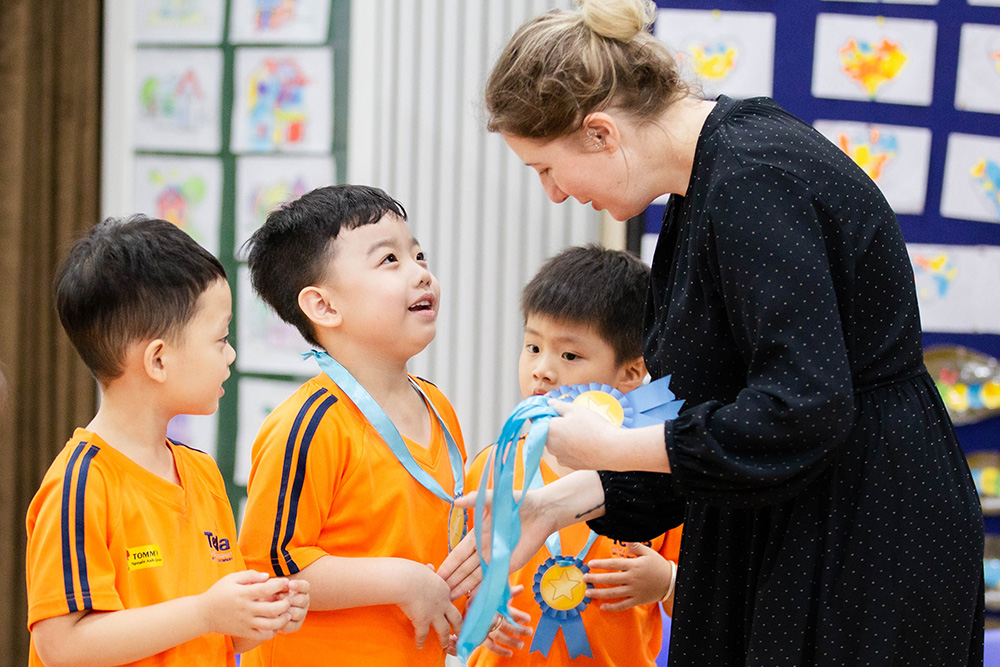
At Tesla Nursery, teachers gently support children during this transition through warm routines, engaging activities, and close attention to each child’s emotional needs.
Within a short time, many children who felt uncertain in the first days begin to walk happily into the classroom.
Why a Nursery Program Can Make a Difference
A well-designed nursery program provides something that even the most loving home environment may struggle to offer consistently:
a balanced developmental environment.
At Tesla Education, our Nursery Program, beginning at age 2, supports children across the most important areas of early childhood development:
- physical development
- language and cognitive growth
- emotional and social development
- independence and life skills
Tesla Nursery Program
A Strong Foundation for Lifelong Learning
Physical Development Through Movement
Young children learn best when they move.
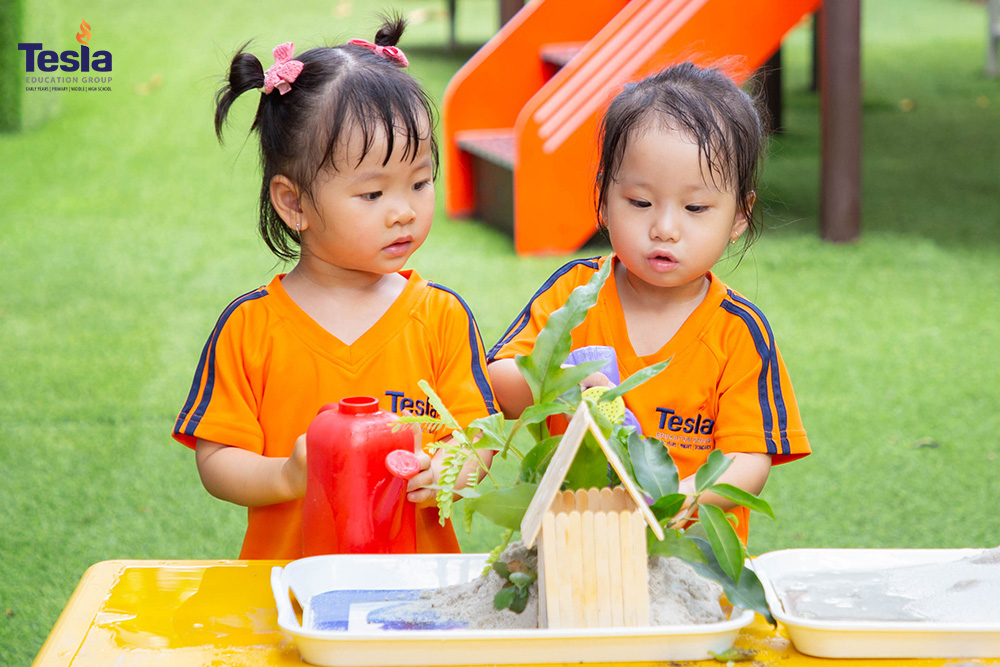
Our nursery students participate in a wide range of physical activities that support healthy brain and body development:
- running and movement games
- balance and coordination activities
- swimming
- general motor skill development
These activities help children build confidence, strength, and coordination, while also supporting cognitive development.
Early Academic Foundations
Even at age two, children are naturally curious and eager to explore the world around them.
At Tesla Nursery, children develop early academic skills through engaging experiences in:
- Vietnamese and English language development
- Early mathematical thinking
- Arts and Music, which strengthen fine motor development
Rather than formal instruction, children learn through storytelling, creative exploration, music, and guided play.
Learning how to interact with others is one of the most important milestones in early childhood.
At Tesla Nursery, children practice:
- guided play with peers
- small group activities
- listening to instructions
- understanding routines and rules
- learning patience, sharing, and cooperation
These experiences help build confidence, empathy, and positive social habits.
Independence and Life Skills
Another important goal of early education is helping children gradually move beyond their comfort zone.
Through daily routines and guided activities, children develop valuable habits such as:
- asking questions
- listening carefully
- focusing on tasks
- waiting patiently
- developing responsibility for small actions
These habits form the foundation for lifelong learning.
Supporting Parents in Raising Children Today
Early childhood education is not only about supporting children.
It is also about supporting parents.
Raising children in the 21st century comes with new challenges — technology, rapidly changing social environments, and evolving educational expectations.
At Tesla Education, we work closely with families to help parents understand:
- child development stages
- healthy learning habits
- balanced use of technology
- strategies for nurturing independence and resilience
Together, parents and educators create the best possible learning environment for children.
A International Learning Journey Starting at Age 2
The early years of life shape how children think, communicate, and learn.
Through a safe, nurturing, and stimulating environment, the Tesla Nursery Program helps children develop strong foundations for:
- language development
- social confidence
- physical health
- curiosity and learning habits
These early foundations prepare children for the next stages of their educational journey, including the International Baccalaureate (IB) programmes offered at Tesla Education.
Tesla Education
International Nursery in Ho Chi Minh City
Tesla Education is an IB World School offering the Primary Years Programme (PYP), Middle Years Programme (MYP), and progressing toward the Diploma Programme (DP).
Our Nursery Programme offers children a joyful beginning to learning within a safe, international environment in Ho Chi Minh City.
Admissions Consultation
Parents are warmly invited to explore the Tesla Nursery Programme through:
- school visits
- parent consultations
- International Nursery experience classes
Discover how Tesla Education can support your child’s first step into a lifetime of learning
Có thể bạn quan tâm
-
 15 Apr, 2026
 -
23 Mar, 2026